One of the most important skills for sustainable health is knowing when more stops helping—and starts hurting.
Last week, I did something many of us have done.
I was feeling strong at the gym, decided to lift a little more weight than usual, and injured my back. The irony wasn’t lost on me. Exercise is one of the best things we can do for our health. Strength training is one of the best investments we can make in healthy agingBut more wasn’t better. More became less. Now I am dealing with muscle strain.
As I reflected on that experience, I realized how often this same lesson appears—in healthcare, in behaviour change, and in everyday life.
We live in a culture that celebrates more. More effort. More productivity. More exercise. More food. More supplements. More information. More tests. More treatment.
Yes, sometimes we need more of something. Yet one of the most valuable skills we can develop is recognizing the point where more becomes less. The point where adding more effort no longer produces better results—and may even begin to work against us.
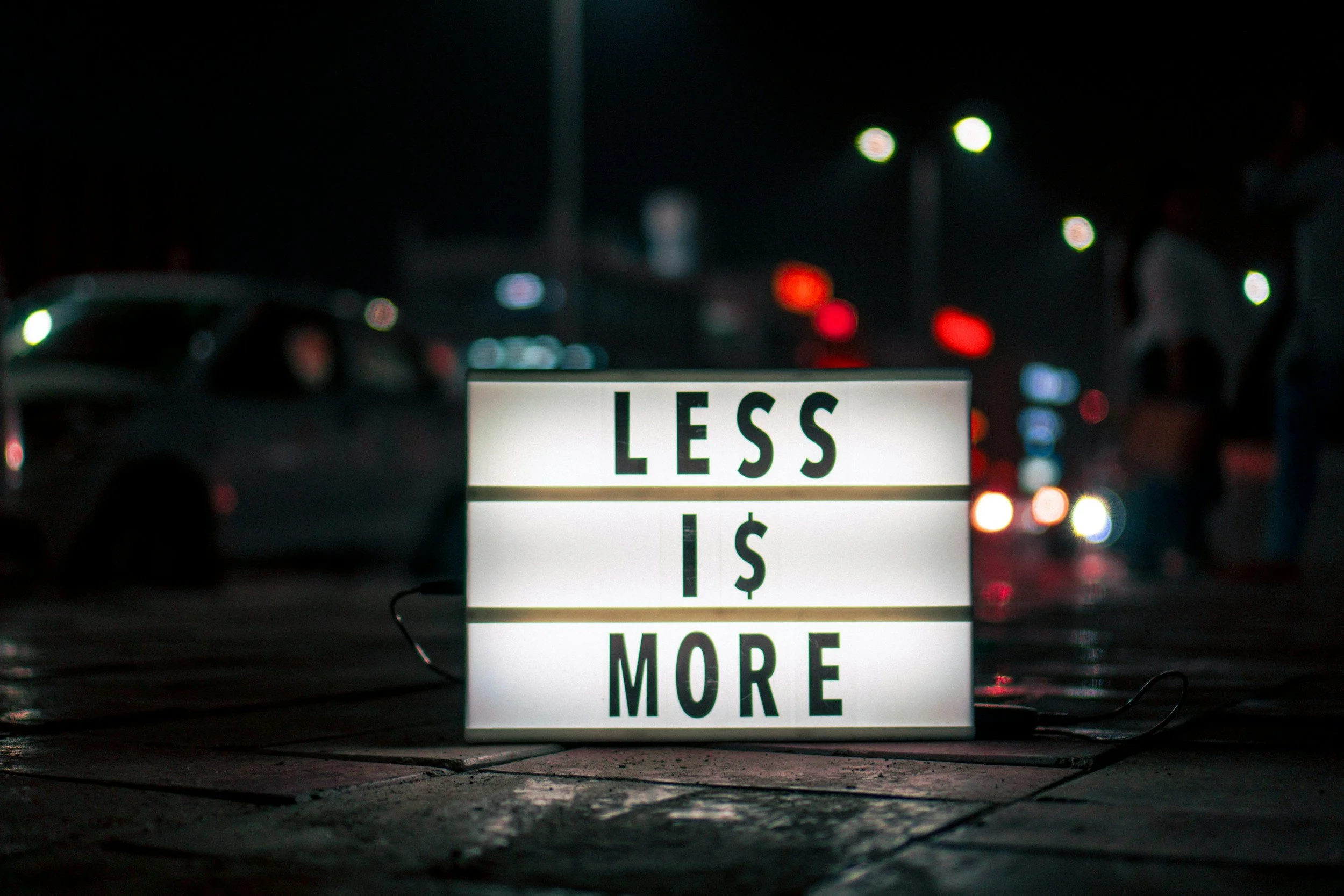
A Lesson from Healthcare
One of the most important conversations happening in healthcare today isn’t about introducing new treatments. It’s about knowing when to stop doing things that no longer add value.
Health Quality BC is hosting a Quality Café called “When Less Is More: Why De-implementation Matters in Quality Improvement.” The focus was on identifying tests, treatments, and practices that provide little benefit—or may even cause harm—and intentionally replacing them with better care.
Similarly, the international Choosing Wisely movement encourages thoughtful conversations between patients and clinicians about avoiding unnecessary investigations and treatments because too many diagnostics and too many interventions can create their own problems.
The message is that healthcare should provide the right care, at the right time, for the right person. That same wisdom applies well beyond healthcare.
We All Have a Point Where More Becomes Less
Our bodies are remarkably adaptable.
But every healthy behaviour has a point where adding more begins to produce diminishing returns—and eventually negative ones. Knowing where that point lies is one of the foundations of sustainable human performance.
Think about it:
More exercise eventually becomes less health when it leads to injury or inadequate recovery.
More food eventually becomes less energy when overeating leaves us sluggish instead of energized.
More work eventually becomes less productivity when fatigue reduces our effectiveness.
More stress eventually becomes less performance when pressure turns into burnout.
More information can become less clarity when we spend so much time consuming advice that we never put it into practice.
Different people reach that point at different times.
The goal isn’t to avoid effort. The goal is learning to recognize your own transition point—the moment when more begins to produce less.

At Foster Health, we focus on sustainable human performance through behaviour change.
One lesson keeps appearing. The goal isn’t to maximize everything. It’s to optimize what matters.
Not maximum effort. The right effort.
Not endless discipline. Sustainable habits.
Not perfection. Consistency.
Sometimes the healthiest question we can ask ourselves isn’t,
“What more should I be doing?” Instead, maybe it’s, “How will I recognize when more becomes less?”
That question invites us to pay attention. To notice. To adjust. To make wiser decisions rather than simply trying harder. Because whether we’re talking about healthcare, exercise, eating, work, sleep, or everyday life, better health isn’t found by constantly adding more.
It’s found by knowing when enough has become enough.
Reflection
This week, ask yourself one simple question: Where in my life am I assuming that more is better? Then ask an even more important one: How will I recognize when my more becomes my less? Sometimes the wisest decision isn’t to push harder.
It’s to recognize the moment when pushing harder begins to push us in the wrong direction.
I’d love to hear from you. What health habit have you discovered can become “too much of a good thing”? Tell me in the comments—I read every response.